
Nail Supply
Why Rubber Base Gel vs Builder Gel Enhancements Matter for Your Nails
Jan
Understanding Gel Basics
When you compare rubber base gel vs builder gel enhancements, you’re weighing flexibility, strength, and finish. Whether you want extra protection for fragile nails or dramatic length and structure, your choice will shape your manicure’s durability, nail health, and application routine.
What Is Rubber Base Gel?
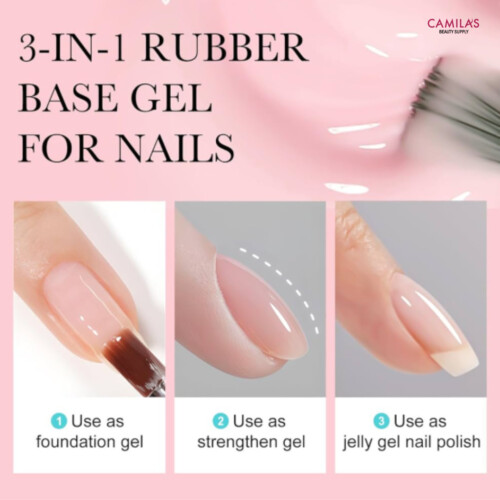
Rubber base gel is a hybrid formula combining traditional gel polish with elastic, self-leveling qualities. It moves with your natural nail, reducing chips and cracks while filling ridges and creating a smooth canvas. Available in clear and tinted shades, it often doubles as both base coat and color layer.
What Is Builder Gel?
Builder gel has a thicker, denser consistency designed to strengthen and extend nails. It cures into a rigid shell that holds custom shapes—coffins, stilettos, and more—without bending. Builder gels range from hard to creamy-medium viscosity and liquid, letting you choose the right density for extensions, repairs, or overlays.
Testing Strength and Durability
Adhesion and Lift Resistance
In side-by-side tests, rubber base gel delivered seamless adhesion at the free edge, especially when used under color or builder gel layers. Builder gel showed less flex but excelled at resisting impact. For a deep dive, see rubber base gel vs builder gel strength.
Wear Time and Longevity
- Rubber base gel manicures lasted about two to four weeks before minor chips appeared.
- Builder gel enhancements held up for three to five weeks, with fewer fills needed.
Your wear schedule also depends on lifestyle and nail prep. For more on durability, check rubber base gel vs builder gel longevity.
Assessing Application Process
Preparation and Layering
Both gels require meticulous prep: cuticle care, light filing, dehydrator, and primer. Rubber base gel works best in a thin first layer followed by a thicker apex layer. Builder gels let you sculpt length in stages: tacky layer, form application, apex building.
Explore detailed steps in our rubber base gel vs builder gel application.
Curing Experience
- Rubber base gel cures under UV/LED lamps in 30 to 60 seconds per layer.
- Builder gel layers may take up to 90 seconds, especially in thicker sections.
Manage heat spikes by tapping the nail mid-cure or using a lower-watt lamp.
Removal Simplicity
Rubber base gel soaks off in 10 to 15 minutes with acetone wraps, gently lifting without drastic filing. Builder gels often require a combination of soaking and light buffing to break through the hardened shell. Learn more at rubber base gel vs builder gel removal.
Reviewing Brand Performance
| Brand | Gel Type | Viscosity | Ideal Use |
|---|---|---|---|
| Kupainc | Builder Gel | Hard | Lengthening, Extensions |
| Tones | Builder Gel | Creamy-Medium | Beginners, Repairs |
| Oxilook | Builder Gel | Liquid | Nail Repairs, Hybrid |
| OPI | Rubber Base Gel | Medium | Neutral Tints, Base |
| Cuccio | Rubber Base Gel | Thick | Ridge Filling, Apex |
| DND | Rubber Base Gel | Colored | Gel Polish Adhesion |
| Luminary Nail Systems | Builder Gel | Creamy | Hybrid Nails, Overlays |
| Apres | Rubber Base Gel | Flexible | Natural Strength |
Each brand we tested delivered on its promise. You’ll find OPI and Cuccio rubber base gels self-level fantastically, while DND stands out for sheer color options. For builder gel pros, Kupainc and Oxilook offered predictable sets, and Tones struck a balance between control and flow.
Comparing Pros and Cons
For a full breakdown, see rubber base gel vs builder gel pros and cons.
Rubber Base Gel Pros
- Flexes with your nail, cuts down lifting
- Fills ridges and creates perfect apex
- Acts as both base and color coat
- Easier soak-off removal
Builder Gel Pros
- Superior strength for lengthy extensions
- Holds custom shapes without form slippage
- Less frequent fills, longer wear
- Low odor compared to acrylics
Selecting Your Perfect Gel
Match to Nail Health
If your nails are weak or prone to breakage, rubber base gel gives you flexibility and protection without bulk. For detailed health comparisons, visit rubber base gel vs builder gel nail health.
Suit Your Extensions
Dreaming of stiletto or coffin lengths? Builder gel is your go-to for structure and lift. You can layer rubber base gel under builder gel to maximize adhesion and reduce lifts, see rubber base gel vs builder gel overlays.
Weigh Cost and Time
Prices range from $15 to $30 per bottle depending on brand and volume. Builder gels may cost a bit more, but fewer fills can balance your budget. Compare your options at rubber base gel vs builder gel cost.
Consider Nail Type
- Natural, thin nails benefit from the elasticity of rubber base gel
- Thick or ridged nails may need builder gel’s bulk for a smooth finish
Learn more at rubber base gel vs builder gel nail types.
Final Takeaway
Choosing between rubber base gel vs builder gel enhancements comes down to your nail goals. If you want everyday flexibility, quick removal, and natural protection, rubber base gel is confident and gentle. For bold length, sculpted shapes, and long-lasting wear, builder gel delivers unmatched strength. Sometimes the best route is a hybrid approach: layer rubber base gel first, then sculpt with builder gel to get the best of both worlds.
Ready to pick your winner? Evaluate your nail health, desired style, and budget, then test a small sample from brands like OPI, DND, Tones, or Kupainc. Your nails will thank you.