
Nail Supply
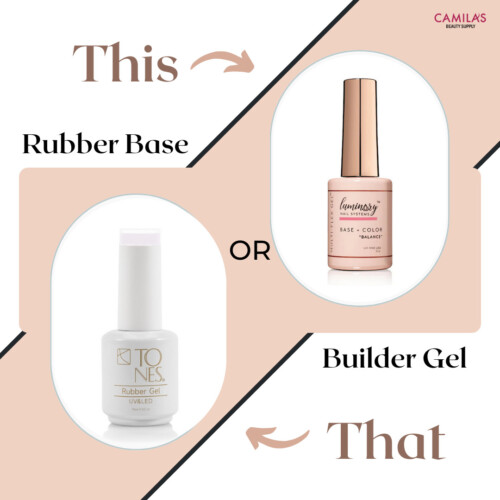
What You Must Know About Rubber Base Gel vs Builder Gel Nail Types
Jan
When it comes to rubber base gel vs builder gel nail types, you’re probably weighing factors like strength, durability, and nail health. In this review you’ll get a clear breakdown of how each formula performs, what to expect on cost and application, and which brands deliver top results. Whether you’re a seasoned nail artist or a confident beginner, you’ll know exactly which gel suits your style and routine.
With offerings from Kupainc, Tones, OPI, Oxilook, Luminary Nail Systems, DND, Cuccio, and Aprés, narrowing in on the perfect formula can feel overwhelming. Let’s dive into side-by-side comparisons, application tips, removal best practices, and standout products so you can make your next manicure your best one yet.
Comparing Gel Types
Strength
Builder gels are formulated for structure, giving you a rigid foundation when you need length or arch support. You’ll notice they resist bending under pressure, which makes them ideal for nail extensions and intricate sculpting. Rubber base gels deliver more flexibility—they flex with your natural nail and help prevent lifting. For a deep dive into force-resistance tests, check our rubber base gel vs builder gel strength analysis.
Longevity and Durability
If you want your manicure to last beyond two weeks, builder gel is your go-to. Its thick consistency holds up to daily wear and tear, making it perfect for overlays and extensions. Rubber base gels typically last 10 to 14 days, but they shine in resisting chips thanks to their elasticity. Learn more about wear-time and longevity metrics in our rubber base gel vs builder gel longevity guide.
Cost
Builder gels can be pricier up front—expect to pay 20 to 30 percent more per bottle than rubber base gels. However, if you need fewer fills thanks to superior durability, you might spend less in the long run. Rubber base gels offer an affordable entry point, especially if you’re testing out gel services. For a detailed breakdown, see our rubber base gel vs builder gel cost comparison.
Nail Health
Sensitive nails benefit from the gentle adhesion of rubber base gels. Their formula often includes nourishing additives that strengthen the natural plate. Builder gels bond more aggressively and require a thinner application over the natural nail to avoid stress. Over time, improper removal can stress your nail bed. Explore tips on maintaining nail integrity in our rubber base gel vs builder gel nail health article.
Application and Removal
Application Ease
Rubber base gels flow smoothly and self-level, making them forgiving if you’re new to gel manicure. They adapt well for overlays and simple enhancements. Builder gels demand more technique—their thicker viscosity means you’ll need a steady hand or nail forms to sculpt extensions. Discover pro tricks in our rubber base gel vs builder gel application tutorial.
Removal Techniques
You’ll soak off rubber base gel in 10 to 15 minutes with acetone wraps, thanks to their slightly softer cure. Builder gels often need more time—up to 20 minutes of soaking and gentle filing to break the seal. Always follow up with nail oil and buffing to restore surface smoothness. For a step-by-step guide, check rubber base gel vs builder gel removal.
Brand Recommendations
Top Rubber Base Gels
- OPI Rubber Base: Known for its balance of stickiness and self-leveling, it’s a salon staple.
- Cuccio Naturalé: Infused with keratin, it guards against splitting and adds shine.
- DND Rubber Base X: Offers buildable coverage with minimal filing.
Top Builder Gels
- Aprés Builder Gel: High-strength formula ideal for sculpting and length retention.
- Kupainc Builder Gel: Smooth application and excellent arch control for nail art.
- Luminary Nail Systems ProBuilder: Fast-curing with ultra-rigid finish that resists breaks.
- Oxilook Builder: Budget-friendly option with professional-grade durability.
For overlays and more intricate enhancements you can also explore our rubber base gel vs builder gel overlays and rubber base gel vs builder gel enhancements deep dives.
Pros and Cons
- Rubber Base Gel Pros
- Flexible adhesion that protects natural nails
- Smooth, self-leveling application
- Easier removal with less filing
- Rubber Base Gel Cons
- Slightly less durable under heavy wear
- May require more frequent fills
- Builder Gel Pros
- Exceptional strength and support for extensions
- Lasts three weeks or more with proper care
- Superior chip resistance
- Builder Gel Cons
- Thicker consistency demands more skill
- Longer soak-off time can dry out nails
Dive into a detailed pros and cons table in our rubber base gel vs builder gel pros and cons.